Holy Name of Jesus
We give honour to the Name of Jesus, not because we believe that there is any intrinsic power hidden in the letters composing it, but because the Name of Jesus reminds us of all the blessings we receive through our Holy Redeemer. To give thanks for these blessings we revere the Holy Name, as we honour the Passion of Christ by honouring His Cross (Colvenerius, "De festo SS. Nominis", ix). At the Holy Name of Jesus we uncover our heads, and we bend our knees; it is at the head of all our undertakings, as the Emperor Justinian says in his law-book: "In the Name of Our Lord Jesus we begin all our consultations". The Name of Jesus invoked with confidence
brings help in bodily needs, according to the promise of Christ: "In my name They shall take up serpents; and if they shall drink any deadly thing, it shall not hurt them: they shall lay their hands upon the sick, and they shall recover". (Mark 16:17-18) In the Name of Jesus the Apostles gave strength to the lame (Acts 3:6; 9:34) and life to the dead (Acts 9:40).
It gives consolation in spiritual trials. The Name of Jesus reminds the sinner of the prodigal son's father and of the Good Samaritan; it recalls to the just the suffering and death of the innocent Lamb of God.
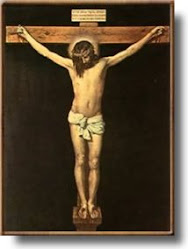
It protects us against Satan and his wiles, for the Devil fears the Name of Jesus, who has conquered him on the Cross.
In the Name of Jesus we obtain every blessing and grace for time and eternity, for Christ has said: "If you ask the Father anything in my name he will give it you." (John 16:23) Therefore the Church concludes all her prayers by the words: "Through Our Lord Jesus Christ", etc.
So the word of St. Paul is fulfilled: "That in the name of Jesus every knee should bow, of those that are in heaven, on earth, and under the earth" (Philippians 2:10).
A special lover of the Holy Name was St. Bernard, who speaks of it in most glowing terms in many of his sermons. But the greatest promoters of this devotion were St. Bernardine of Siena and St. John Capistran. They carried with them on their missions in the turbulent cities of Italy a copy of the monogram of the Holy Name, surrounded by rays, painted on a wooden tablet, wherewith they blessed the sick and wrought great miracles. At the close of their sermons they exhibited this emblem to the faithful and asked them to prostrate themselves, to adore the Redeemer of mankind. They recommended their hearers to have the monogram of Jesus placed over the gates of their cities and above the doors of their dwelling (cf. Seeberger, "Key to the Spiritual Treasures", 1897, 102). Because the manner in which St. Bernardine preached this devotion was new, he was accused by his enemies, and brought before the tribunal of Pope Martin V. But St. John Capistran defended his master so successfully that the pope not only permitted the worship of the Holy Name, but also assisted at a procession in which the holy monogram was carried. The tablet used by St. Bernardine is venerated at Santa Maria in Ara Coeli at Rome.
The emblem or monogram representing the Holy Name of Jesus consists of the three letters: IHS. In the Middle Ages the Name of Jesus was written: IHESUS; the monogram contains the first and last letter of the Holy Name. It is first found on a gold coin of the eight century: DN IHS CHS REX REGNANTIUM (The Lord Jesus Christ, King of Kings). Some erroneously say that the three letters are the initials of: "Jesus Hominum Salvator" (Jesus Saviour of Men). The Jesuits made this monogram the emblem of their Society, adding a cross over the H and three nails under it. Consequently a new explanation of the emblem was invented, pretending that the nails originally were a "V", and that the monogram stands for "In Hoc Signo Vinces" (In This Sign you shall Conquer), the words which, according to a legendary account, Constantine saw in the heavens under the Sign of the Cross before the battle at the Milvian bridge (312).
Urban IV and John XXII are said to have granted an indulgence of thirty days to those who would add the name of Jesus to the Hail Mary or would bend their knees, or at least bow their heads when hearing the Name of Jesus (Alanus, "Psal. Christi et Mariae", i, 13, and iv, 25, 33; Michael ab Insulis, "Quodlibet", v; Colvenerius, "De festo SS. Nominis", x). This statement may be true; yet it was only by the efforts of St. Bernardine that the custom of adding the Name of Jesus to the Ave Maria was spread in Italy, and from there to the Universal Church. But up to the sixteenth century it was still unknown in Belgium (Colven., op. Cit., x), whilst in Bavaria and Austria the faithful still affix to the Ave Maria the words: "Jesus Christus" (ventris tui, Jesus Christus). Sixtus V (2 July, 1587) granted an indulgence of fifty days to the ejaculation: "Praise be to Jesus Christ!" with the answer: "For evermore", or "Amen". In the South of Germany the peasants salute each other with this pious formula. Sixtus V and Benedict XIII granted an indulgence of fifty days to all as often as they pronounce the Name of Jesus reverently, and a plenary indulgence in the hour of death. These two indulgences were confirmed by Clement XIII, 5 Sept., 1759. As often as we invoke the Name of Jesus and Mary ("Jesu!", "Maria!") we may gain an indulgence of 300 days, by decree of Pius X, 10 Oct., 1904. It is also necessary, to gain the papal indulgence in the hour of death, to pronounce at least in mind the Name of Jesus.
About this page
APA citation. Holweck, F. (1910). Holy Name of Jesus. In The Catholic Encyclopedia. New York: Robert Appleton Company. Retrieved January 3, 2009 from New Advent: http://www.newadvent.org/cathen/07421a.htm
MLA citation. Holweck, Frederick. "Holy Name of Jesus." The Catholic Encyclopedia. Vol. 7. New York: Robert Appleton Company, 1910. 3 Jan. 2009
Transcription. This article was transcribed for New Advent by Paul Koenen. Dedicated to Kathleen, Brigid, Deirdre, Liam, Patrick, and the Holy Name Society of St. Paul's Parish in Hingham, Mass.
Ecclesiastical approbation. Nihil Obstat. June 1, 1910. Remy Lafort, S.T.D., Censor. Imprimatur. +John Cardinal Farley, Archbishop of New York.
Contact information. The editor of New Advent is Kevin Knight. My email address is feedback732 at newadvent.org. (To help fight spam, this address might change occasionally.) Regrettably, I can't reply to every letter, but I greatly appreciate your feedback — especially notifications about typographical errors and inappropriate ads.
Copyright © 2008 by Kevin Knight. Dedicated to the Immaculate Heart of Mary
http://www.newadvent.org/cathen/07421a.htm