CHRISTIAN RELIGION ARTICLES

mercoledì 20 maggio 2009

Who is Jesus Christ


Who is Jesus Christ
http://www.crosswalk.com/who-is-jesus/


Christ the Messiah... The Prince of Peace… The Word made man… Savior and Lord… The King of Kings… The Lion of Judah… The Lamb of God

When Christians answer the question "Who is Jesus Christ?" they build their answer on the Bible – on things Jesus said about Himself, on prophecies from the Old Testament that foretold His coming, and the doctrines laid out about Jesus Christ and His Church through the rest of the New Testament.

There is little doubt historically that Jesus Christ existed, but people do often wonder about His divine nature, His miracles, and God’s offer of eternal salvation by grace through Jesus Christ "first to the Jew and also to the Gentile" (Romans 1:16)… in other words, to all mankind who would believe.

Because the love that Jesus offers comes in the form of a "personal relationship" with Him, many believers have particular definitions about who Jesus Christ is to them. We want to give you the Biblical basics about this amazing, paradoxical Savior who purports to be simultaneously the Son of God and Son of Man.

The gospel of Jesus is literally "good news," so we hope you enjoy exploring the miracle and wonder of what the God of all creation did for you through His Son.

Let's begin our study on the identity of Jesus Christ in the Gospel of Matthew, Chapter 16, where the Lord put the very question to His own disciples:

When they came to the area of Caesarea Philippi, he asked his followers, "Who do people say the Son of Man is?" They answered, "Some say you are John the Baptist. Others say you are Elijah, and still others say you are Jeremiah or one of the prophets." Then Jesus asked them, "And who do you say I am?" Simon Peter answered, "You are the Christ, the Son of the living God." Jesus answered, "You are blessed, Simon son of Jonah, because no person taught you that. My Father in heaven showed you who I am." (vs. 13-17)

The same questions are being asked to this day: Who does everyone else say Jesus Christ is, but then, who do you say He is? It is the most important question to settle during your lifetime, for reasons we'll examine shortly.

The New Testament book of Hebrews is another source that attempted to answer the same question for an uncertain group of people. As the Ryrie Study Bible states, "The theme of the book is the superiority of Jesus Christ and thus of Christianity." But superior to what? Among other things: prophets, angels, Moses/The Law, priests, and other powers. In other words, Jesus Christ is supreme among any thing that has issued from God, or any person that is beloved of God. "For this reason we must pay much closer attention to what we have heard, lest we drift away from it," says Hebrews 2:1 about the nature of the Messiah’s identity. This is why even Christians continually study these precepts; it is not merely skeptics, seekers, and unbelievers who benefit from asking the question, "Who is Jesus Christ?"

The Apostle Paul, before his conversion, was known as Saul, a legalistic Jew who persecuted Christians… until he was confronted with the answer to our question in a most dramatic way that changed his life and the course of history (read about it in Acts Chapter 9). After that, Paul would often refer to himself as a "bond-servant of Christ Jesus," someone little more than a voluntary slave, but one sharing in the same servitude. How did Paul answer our question? In Philippians 1:21 he would express his secure devotion to the Lord when he wrote: "For to me, to live is Christ, and to die is gain."

You see, finding the answer can be jarring and life-altering. It can also fill what has seemed to be missing inside you, since the Father sent His Son to reconcile you to your original purpose – communion with a wonderful, holy Creator. So as you pursue knowledge of the Savior, consider yourself joyfully warned.

WHAT JESUS SAID OF HIMSELF
He is the Son of God, equal with God, and with authority from the Father

“Then they all said, ‘Are You then the Son of God?’ So He said to them, ‘You rightly say that I am’” (Luke 22:70).

“For whoever does the will of My Father in heaven is My brother and sister and mother" (Matthew 12:50).

“Jesus came and spoke to them, saying, ‘All authority has been given to Me in heaven and on earth’” (Matthew 28:18).

“Therefore the Jews sought all the more to kill Him, because He not only broke the Sabbath, but also said that God was His Father, making Himself equal with God” (John 5:17-22).

Bear in mind that while a man claiming to be God is a radical thought, Jesus is the only leader of a world religion to have made the claim – not to mention backed it up. How? Keep reading…

He lived a sinless life

“Can any one of you convict me of a single misleading word, a single sinful act? But if I'm telling the truth, why don't you believe me?” (John 8:46, The Message).

Jesus had the ability to sin; if He weren’t able to sin, He could not have been tempted genuinely and would be unable to be our sympathetic High Priest (Hebrews 4:15). When He was tempted, He always rebuked the thought with scripture (Luke 4:1-13).

Because He didn’t sin, God was able to accept His sacrifice. 1 Peter 3:18 says, “Christ also suffered once for sins, the just for the unjust, that He might bring us to God, being put to death in the flesh but made alive by the Spirit.”

He said He is the one and only way to God

“I am the way, the truth, and the life. No one comes to the Father but by me” (John 14:6).


Who is Jesus Christ - New Testament Son of God


“So Jesus tried again. ‘When you raise up the Son of Man, then you will know who I am - that I'm not making this up, but speaking only what the Father taught Me. The One who sent Me stays with Me. He doesn't abandon Me. He sees how much joy I take in pleasing Him’” (John 8:28-29, The Message).

“In the beginning was the Word, and the Word was with God, and the Word was God. He was in the beginning with God. All things came into being by Him, and apart from Him nothing came into being that has come into being” (John 1:1-3, NAS).

“For God so loved the world that he gave his only Son, so that everyone who believes in Him will not perish but have eternal life” (John 3:16, NLT).

From The Book of Acts

The Book of Acts describes how Christianity moved from being seen as a sect of Judaism into a world religion because the spirit of God moved in the lives of those who had witnessed Jesus, and who now carried His message of salvation into all the world.

At Pentecost, Peter preaches, “Let all the house of Israel know for certain that God has made Him both Lord and Christ – this Jesus whom you crucified” (Acts 2:22-36).

From Paul’s Letters

The Apostle Paul wrote numerous letters to the churches he helped establish in southern Europe and Asia Minor, helping to answer questions or solve disputes over Christian theology.

“Therefore having been justified by faith, we have peace with God through our Lord Jesus Christ” (Romans 5:1).

“For no man can lay a foundation other than the one which is laid, which is Jesus Christ” (1 Corinthians 3:11).

“Just as the sufferings of Christ are ours in abundance, so also our comfort is abundant through Christ” (2 Corinthians 1:5).

“It was for freedom that Christ set us free” (Galatians 5:1).

“Husbands, love your wives, just as Christ also loved the church and gave Himself up for her” (Ephesians 5:25).

“Have this attitude in yourselves which was also in Christ Jesus, who, although He existed in the form of God, did not regard equality with God a thing to be grasped, but emptied Himself, taking the form of a bond-servant, and being made in the likeness of men” (Philippians 2:5-7).

“And He is the image of the invisible God, the first-born of all creation” (Colossians 1:15).

From The Book of Hebrews

The Book of Hebrews is about the superiority of Christ – over prophets, angels, Moses, and priests. He made Himself our High Priest, so that we can all become priests with our own access to the Father.

“God… has spoken to us in His Son, whom He appointed heir of all things” (Hebrews 1:1-2).

From The Book of Revelation

“Jesus Christ, the faithful witness, the first-born of the dead, and the ruler of the kings of the earth” (Revelation 1:5).

From Demons

“Suddenly they cried out, saying, "What have we to do with You, Jesus, You Son of God? Have You come here to torment us before the time?" (Matthew 8:29).

What’s a Testament?

The Old and New Testaments are covenants God has made with His people. Covenants are binding agreements made with blood. The New Testament represents the new agreement God has with man because of all the requirements and prophecies Jesus fulfilled.


Who is Jesus Christ - Humanity of Son of Man


It was one of Jesus’ favorite ways to refer to Himself. He’s quoted 85 times in the King James Version of the New Testament calling Himself the “Son of Man.” Here are some of His human characteristics:

Jew who grew up in Nazareth, learned carpentry from his earthly father, “grew in wisdom & stature, and in favor with God and man,” (Luke 2:52) and began a ministry throughout Israel at age 30.
The cousin of John the Baptist, who proclaimed the coming of the Messiah.
Was baptized by John at the beginning of His ministry, at which point a voice from the heavens proclaimed, “Thou art My beloved Son; in Thee I am well-pleased.” (Luke 3:22, NAS)
Was tempted by Satan in the wilderness for 40 days, at which time He fasted and prayed, and resisted temptation by quoting scripture.
Was misunderstood by His family and those of His hometown.
The half-brother of James, who authored the Book of James, and was a leader of the early church.
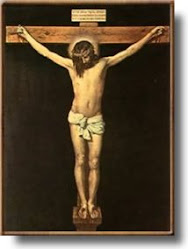
After ministering, healing, and teaching for three years, was crucified outside Jerusalem during the feast of Passover by the Romans at the demand of Jewish religious leaders.
Had human needs to eat, drink, and sleep.
Showed human emotions of love, happiness, sadness, and anger… but not fear, hatred, or pride.
Born in Bethlehem into a poor family where the mother, Mary, was a virgin. Both she and Joseph the “step-father” were of the line of David and the tribe of Judah, fulfilling prophecies from: Micah 5:2, Genesis 3:15, Isaiah 7:14, Genesis 49:10, Psalm 132:11, Jeremiah 23:5, and Isaiah 11:10.

THE SIGNIFICANCE OF CHRIST'S HUMANITY

Living on earth for 33 years, Jesus experienced every temptation you and I face, which is why “the Lord knows how to rescue the godly from temptation” (2 Peter 2:9). He also showed us how to model our behavior. 1 Peter 2:21 says, “Christ also suffered for you, leaving you an example for you to follow in His steps.”

So, He knows what we go through. A god-savior could forgive sins, but would not be able to relate to the sinners. A man-savior would be able to relate to humanity, but would not have the authority or power to forgive sins or return from the dead. It was necessary that Jesus be both.

In doing so, he became “the New Adam.”

“For as in Adam [the first man, through whom sin entered the world] all die, so also in Christ all shall be made alive. So also it is written, ‘The first man, Adam, became a living soul.’ The last Adam became a life-giving spirit” (1 Corinthians 15:22, 45).

WHO KILLED JESUS?

With the release of the film The Passion of the Christ, this question again became something of an issue. Was Pilate responsible? Was it Rome? Was it the Sanhedrin, or the entire Hebrew Nation? Or did you and I kill Jesus?

Yes. And no. First, He’s not dead. Upon His death He descended into Hell, where He took the keys and ministered to the dead. After three days, He came back to life, and not as a spirit, but with flesh and bones. When, after 40 days, He left His followers again, He ascended into Heaven, where He sits at the right hand of the Father until the time comes when He will return.

Second, Christ offered Himself up as a sacrifice, which is why we are to daily offer up ourselves as “living sacrifices” (Romans 12:1). With armies of angels and the power of the heavens at His command, would it have been possible to hang the Son of God on a cross without His permission? What’s more, how awful would it be for us now had nobody “killed” Jesus? We required His perfect blood to wash our sins away. “Without the shedding of blood there is no forgiveness” (Hebrews 9:22).

Therefore, to blame any individual or group for “murdering” Jesus is incorrect, and a dishonor to His sacrifice.


It’s also interesting to note that Jesus did not call himself the destination, but the way, indicating that while salvation is immediate for the confessed and forgiven sinner, our Christian walk is a journey.


Who Jesus Christ was Not - Bible Truth


JESUS WAS NOT SIMPLY A GOOD MORAL TEACHER.

How, in the name of logic, common sense, and experience, could an impostor -- that is a deceitful, selfish, depraved man -- have invented and consistently maintained from the beginning to end, the purest and noblest character known in history with the most perfect air of truth and reality? How could He have conceived and successfully carried out a plan of unparalleled beneficence, moral magnitude, and sublimity, and sacrificed His own life for it, in the face of the strongest prejudices of His people and age? (Philip Schaff, The Person of Christ. New York: American Tract Society, 1913, 94-95)
C.S. Lewis, one-time atheist and author of The Chronicles of Narnia, put the dilemma this way:

A man who was merely a man and said the sort of things Jesus said [about Himself] would not be a great moral teacher. He would either be a lunatic -- on a level with the man who says he is a poached egg -- or else he would be the Devil of Hell. You must make your choice. Either this man was, and is, the Son of God; or else a madman or something worse. You can shut Him up for a fool, you can spit at Him and kill Him as a demon, or you can fall at His feet and call Him Lord and God. But let us not come away with any patronizing nonsense about His being a great human teacher. He has not left that open to us. He did not intend to. (Mere Christianity)
Jesus would have to have been lying or insane (not the qualities of a good moral teacher) to call Himself the Son of God and the Savior of mankind if it weren’t true.

Therefore, to separate what is comfortable about Jesus – His kindness, His message of unconditional love, His healing of the sick – from that which is less comfortable (He was born of a virgin, He claimed to be God, He rose from the dead) isn’t really possible.

There are four options open to a person dealing with Jesus. You may consider Him: a legend, a liar, a lunatic, or Lord and God. If He existed, then He's not a legend. If He's a liar, that goes against everything else we know about His character. If He's a lunatic, how to explain the consistency in His message, the constancy of His love? If those options are removed, where does that leave you?

JESUS WAS/IS NOT A POLITICAL MESSIAH

This is one reason some Jews of Jesus’ time could not believe He was their Savior – He didn’t deliver them from the oppression of their Roman occupiers. He never actually intended to. The deliverance Christ offered and still offers today is of a spiritual nature, reconciling mankind to God (Matthew 11:27). The peace this Messiah brings is internal. His hope is for each human to be restored to a relationship with God, which sin has broken.

Who is Jesus Christ - Messiah Salvation


JESUS – literally, “God saves.” In the original Hebrew, the name is Yeshua, “salvation,” and/or “The Lord who is salvation.” It is the name the Angel of the Lord told Joseph to bestow upon Him (Matthew 1:20-21).

And there is power in His name: “And being found in appearance as a man, He humbled Himself and became obedient to the point of death, even the death of the cross. Therefore God also has highly exalted Him and given Him the name which is above every name, that at the name of Jesus every knee should bow, of those in heaven, and of those on earth, and of those under the earth, and that every tongue should confess that Jesus Christ is Lord, to the glory of God the Father” (Philippians 2:8-11).

CHRIST – Not His last name. It’s a Greek title meaning “Anointed Messiah.”

It denotes that He was… consecrated to his great redemptive work as Prophet, Priest, and King of his people… To believe that ‘Jesus is the Christ’ is to believe that He is the Anointed, the Messiah of the prophets, the Savior sent of God, that He was… what He claimed to be. This is to believe the gospel, by the faith of which alone men can be brought unto God. That Jesus is the Christ is the testimony of God, and the faith of this constitutes a Christian (1 Corinthians 12:3; 1 John 5:1). (Easton’s 1897 Bible Dictionary).
MESSIAH – The deliverer whose coming was foretold by the prophets of the Old Testament. Jews still await the coming of their Messiah today (link to MessiahRevealed.org).

SALVATION – The condition of being redeemed by faith, saved by grace from an eternity of damnation. Salvation is also the belief that the death and resurrection of Christ accomplished:

Substitution – Christ sacrificed Himself in the place of sinners, just for unjust
Redemption – He paid the price of sin for each individual who accepts it
Reconciliation – Man is no longer alienated from God
Propitiation – God is satisfied with the sacrificial death of His perfect lamb as payment for sin
The Fulfillment of The Law
LINKS

More about Jesus:

Who Is Jesus? (from WhoIsJesus-Really.com)
The Jesus Film Project
Related Topics:

Receiving Salvation (The “Romans Road” to salvation at Contender Ministries)
What Is Christianity? (Continue reading more at Christianity.com)
Historical Evidence of Jesus (from Probe Ministries)
The Only Way to Heaven? (from John MacArthur)
He had the power to forgive sins and provide everlasting life


Who is Jesus Christ - Salvation


THE PROBLEM: Holy God and sinful man.

"For all have sinned and fall short of the glory of God" (Romans 3:23).

"The wages of sin is death, but the free gift of God is eternal life in Christ Jesus our Lord" (Romans 6:23).

The word “sin” is used in a lot of ways, but the essential meaning and result of sin is separation from God, since it involves pride -- man thinking more highly of his own ways than God’s. Without Jesus, His sacrifice and resurrection, connecting to God is not possible because of sin. We all have sinned, the results of which are death and an eternity separated from God. Since God is Holy, there can be no imperfection in His presence.

But death was not God’s plan for us. Abundant and eternal life (John 10:10) is what Jesus came to bring.

Why? Because even though man was broken and earth given over to evil, God never stopped loving us. Romans 5:8 says, "But God showed His great love for us by sending Christ to die for us while we were still sinners."

THE RE-CONNECTION TO GOD

Nothing but Jesus could have permanently fixed the problem – it was a gap that could not be bridged. Your best work just can’t get you to Heaven. Even if you could somehow achieve a score of 99 out of 100 in life, you’d still need a sacrificial savior to make up the difference and pay off your debt. That’s the difference between Grace and the Law. James 2:10 says, "For whoever keeps the whole law and yet stumbles in one point, he has become guilty of all."

However, “God saved you by His special favor when you believed. And you can't take credit for this; it is a gift from God. Salvation is not a reward for the good things we have done, so none of us can boast about it.” (Ephesians 2:8-9). You can’t earn a gift – it's an unmerited favor. You do, however, have to make the choice to accept it.

So, we all, as sinners, have to turn to God for forgiveness of sin, and trust that Jesus died to give us new life that we may be born again (John 3:3; 1 Peter 1:23).

Faith is the key. It’s the cause and effect of our hope for salvation. If there is truly “no other name under heaven that has been given among men, by which we must be saved” (Acts 4:12), then your acceptance of God’s gift, your admission that you are a sinner, your repentance (changing of your mind), and your faith in the real-but-unseen Lord is all that can bring eternal and abundant life.

If knowing about Jesus has stirred your heart to hear even more, receive forgiveness for your sins, renew your Christian walk, or get involved in ministry, you may pray the following prayer, and/or follow the links below to any of our excellent ministry partners:

"Lord God, thank you for loving me enough to send your one and only Son to die for me. I know I am a sinner, and that Jesus was crucified and raised to life to pay a debt I was unable to pay, in order that I may live with You forever. I want to turn from my way of life and follow Jesus. I invite Jesus into my heart as the Lord of my life. Thank you, Father, for giving me new life in the name of Jesus. Amen!"

What’s the next step? Connect with other Christians, learn more, find a church… these ministries can help you with those concerns!

MINISTRIES

The complete list of Salem Web Network Ministry Partners

Harvest Ministries: How to Know God
Harvest Christian Fellowship: How to Know God
Answers with Bayless Conley: What To Do Next
Christian Research Institute: The Essentials of Salvation
Grace to You: How Can I Be Sure of My Salvation?
PowerPoint: Your New Life in Christ
Use FindAChurch.com


“Jesus said to her, ‘I am the resurrection and the life. He who believes in me will live, even though he dies; and whoever lives and believes in me will never die” (John 11:25).


http://www.crosswalk.com/who-is-jesus/

“When Jesus saw their faith, He said, ‘Friend, your sins are forgiven.’ The Pharisees and the teachers of the law began thinking to themselves, ‘Who is this fellow who speaks blasphemy? Who can forgive sins but God alone?’” (Luke 5:20-21).

"For my Father's will is that everyone who looks to the Son and believes in Him shall have eternal life, and I will raise him up at the last day" (John 6:40).

“I tell you the truth, he who believes has everlasting life.” (John 6:47).

He predicted his own death and resurrection

“Jesus took the Twelve aside and told them, ‘We are going up into Jerusalem, and everything that is written by the prophets about the Son of Man will be fulfilled. He will be handed over to the Gentiles. They will mock him, insult him, spit on him, flog him and kill him. On the third day he will rise again’” (Luke 18:31-33).

He said He would come back

Matthew 24:27-30 "So as the lightening comes from the east and flashes to the west, so will be the coming of the Son of Man... At that time the sign of the Son of Man will appear in the sky, and all the nations of the earth will mourn. They will see the Son of Man coming on the clouds of the sky, with power and great glory."

Mark 14:61-62 "Again the high priest asked him, 'Are you the Christ, the Son of the Blessed One?' 'I am,' said Jesus. 'And you will see the Son of Man sitting at the right hand of the Mighty One and coming on the clouds of heaven.'"

Jesus clearly knew He was the Lamb of God, the Messiah spoken of in the Old Testament. He knew He had to live a life without sin, no matter what. When He returns, He will judge the sins of the world… except for those who have already acknowledged conviction, entered a plea of guilty, and sought His mercy by believing on Christ.


Who is Jesus Christ - Old Testament Messiah Prophecy


He was wounded for our transgressions; He was bruised for our iniquities: the chastisement of our peace was upon Him; and with His stripes we are healed. (Isaiah 53:5)

The stone which the builders rejected has become the chief cornerstone. (Psalm 118:22)

He will swallow up death for all time, and the Lord God will wipe away tears from all faces, and He will remove the reproach of His people from all the earth. (Isaiah 25:8)

EXCERPTED FROM www.whoisjesus-really.com:

The Old Testament was completed hundreds of years before Jesus was born. A large number of prophecies were made in astonishing detail by many people throughout these books. In fact, fulfilled prophecy is one of the distinguishing marks of the Bible, authenticating its claim to be the inspired Word of God.

For example, the Old Testament indicated Jesus would be betrayed by someone he trusted. "Even my close friend whom I trusted, he who has shared my bread, has lifted up his heel against me" (Psalm 41:9). The New Testament, which records Jesus' life and resurrection, reveals that one of the 12 people Jesus chose to be part of his inner circle betrayed him: "Then Judas Iscariot, one of the Twelve, went to the chief priests to betray Jesus to them" (Mark 14:10).

More than 300 Messianic prophecies like this were made in the Old Testament and then fulfilled through Jesus' life, death and resurrection. The chances of one person fulfilling a mere eight of these prophecies are one-in-100,000,000,000,000,000. For one person to fulfill 48 of these prophecies, the number becomes staggering – one chance in 10-to-the-157th power. Add to that the 250 other prophecies, and it becomes impossible for any other person except Jesus to ever fit that particular sequence of time and events. A FEW EXAMPLES

A FEW EXAMPLES

Messiah to be born of a virgin: Prophesied – Isaiah 7:14; Fulfilled – Matthew 1:18-25

Messiah to be accursed and crucified: Prophesied – Deuteronomy 21:22-23, Psalm 22, Psalm 69:21; Fulfilled – Matthew 27:34-50; John 19:28-30, Galatians 3:13

Messiah to be raised from the dead: Prophesied – Psalm 16:10; Fulfilled – Acts 13:35-37

For a more thorough discussion of Messianic prophecies fulfilled by Jesus, visit greatcom.org.

http://www.crosswalk.com/who-is-jesus/christ/

Homosexuality: The Christian Perspective

Homosexuality: The Christian Perspective
By: Lehman Strauss , Litt.D., F.R.G.S. Homosexuality: The


Q. What is homosexuality?

Homosexuality is the manifestation of sexual desire toward a member of one's own sex or the erotic activity with a member of the same sex. (The Greek word homos means the same). A lesbian is a female homosexual. More recently the term "gay" has come into popular use to refer to both sexes who are homosexuals.

Q. How does one determine if the practice of homosexuality is right or wrong?

That depends upon who is answering the question. The Christian point of view is based solely upon the Bible, the divinely inspired Word of God. A truly Christian standard of ethics is the conduct of divine revelation, not of statistical research nor of public opinion. For the Christian, the Bible is the final authority for both belief and behaviour.

Q. What explicitly does the Bible teach about homosexuality?

This question I consider to be basic because, if we accept God's Word on the subject of homosexuality, we benefit from His adequate answer to this problem. I am concerned only with the Christian or biblical view of homosexuality. The Bible has much to say about sex sins in general.

First, there is adultery. Adultery in the natural sense is sexual intercourse of a married person with someone other than his or her own spouse. It is condemned in both the Old and New Testaments (Exodus 20:14; I Cor. 6:9, 10). Christ forbids dwelling upon the thoughts, the free play of one's imagination that leads to adultery (Matthew 5:28).

Second, there is fornication, the illicit sex acts of unmarried persons which is likewise forbidden (I Corinthians 5:1; 6:13, 18; Ephesians 5:3).

Then there is homosexuality which likewise is condemned in Scripture. The Apostle Paul, writing by inspiration of the Holy Spirit, declares that homosexuality "shall not inherit the kingdom of God" (I Corinthians 6:9; 10). Now Paul does not single out the homosexual as a special offender. He includes fornicators, idolators, adulterers, thieves, covetous persons, drunkards, revilers and extortioners. And then he adds the comment that some of the Christians at Corinth had been delivered from these very practices: "And such were some of you: But ye are washed, but ye are sanctified, but ye are justified in the name of the Lord Jesus, and by the spirit of our God" (I Corinthians 6:11). All of the sins mentioned in this passage are condemned by God, but just as there was hope in Christ for the Corinthians, so is there hope for all of us.

Homosexuality is an illicit lust forbidden by God. He said to His people Israel, "Thou shalt not lie with mankind, as with womankind: it is abomination" (Leviticus 18:22). "If a man also lie with mankind, as he lieth with a woman, both of them have committed an abomination: they shall surely be put to death; their blood shall be upon them" (Leviticus 20:13). In these passages homosexuality is condemned as a prime example of sin, a sexual perversion. The Christian can neither alter God's viewpoint nor depart from it.

In the Bible sodomy is a synonym for homosexuality. God spoke plainly on the matter when He said, "There shall be no whore of the daughters of Israel, nor a sodomite of the sons of Israel" (Deuteronomy 23:17). The whore and the sodomite are in the same category. A sodomite was not an inhabitant of Sodom nor a descendant of an inhabitant of Sodom, but a man who had given himself to homosexuality, the perverted and unnatural vice for which Sodom was known. Let us look at the passages in question:

But before they lay down, the men of the city, even the men of Sodom, compassed the house around, both old and young, all the people from every quarter:

And they called unto Lot, and said unto him, Where are the men which came in to thee this night? Bring them out unto us, that we may know them.

And Lot went out at the door unto them, and shut the door after him, And said, I pray you, brethren, do not so wickedly.

Behold now, I have two daughters which have not known man; let me, I pray you, bring them out unto you, and do ye to them as is good in your eyes: only unto these men do nothing; for therefore came they under the shadow of my roof. (Genesis 19:4-8)

The Hebrew word for "know" in verse 5 is yada`, a sexual term. It is used frequently to denote sexual intercourse (Genesis 4:1, 17, 25; Matthew 1:24, 25). The message in the context of Genesis 19 is clear. Lot pled with the men to "do not so wickedly." Homosexuality is wickedness and must be recognized as such else there is no hope for the homosexual who is asking for help to be extricated from his perverted way of life.

Q. You said that sexua1 intercourse outside of marriage is condemned in the Bible. How do you explain marriage ceremonies in which two persons of the same sex are united by an officiating clergyman or justice of the peace?

There are cases on record where a marriage license was issued to persons of the same sex. I recall one such incident in Phoenix, Arizona. A marriage license was issued in the Maricopa County clerk's office to two men 39 and 21 years old respectively. The two men are reported to have "married" in a private ceremony.

However, to call a union of two persons of the same sex a "marriage" is a misnomer. In the Bible, marriage is a divinely ordered institution designed to form a permanent union between one man and one woman for one purpose (among others) of procreating or propagating the human race. That was God's order in the first of such unions (Genesis 1:27, 28; 2:24; Matthew 19:5). If, in His original creation of humans, God had created two persons of the same sex, there would not be a human race in existence today. The whole idea of two persons of the same sex marrying is absurd, unsound, ridiculously unreasonable, stupid. A clergyman might bless a homosexual marriage but God won't.

Q. A Jesuit Priest, John J. McNeill, reportedly said in a conference (Christianity Today, June 3, 1977), "There is no clear condemnation of homosexual activity to be found anywhere in the Bible." How does a church leader arrive at such a conclusion?

This particular Jesuit priest, like some other supposedly Christian theologians, have totally ignored the Scriptures as the guidelines for Christian behaviour in regard to homosexuality. McNeill does not speak for the Roman Catholic Church, but for a small segment of priests who, having vowed themselves to celibacy, that is, to abstain from marriage and sexual intercourse, have found sexual gratification in homosexual acts.

However, religious sex perverts are plentiful among protestants. Protestant leaders on both sides of the Atlantic have gradually eased away from the Scriptures. In England men like Bishop John Robinson, in his book Honest to God made a play on the term "The New Morality," which in reality was a plea to open the door to immorality making it respectable and thus acceptable. The Bishop went so far as to describe the unscriptural adulterous relationship as "a kind of holy communion." This modern concept of Christian ethics rejects totally the precepts laid down by God in His Word. It is blasphemous and atheistic.

Recently in America ten homosexually oriented religious organizations, comprised of men and women from more than a dozen denominations, and from seventeen states and Canada, met at Kirkbridge, a retreat and study center near Bangor, Pennsylvania. The retreat was entitled, "Gay and Christian." But the two terms, "gay" and "Christian" are mutually exclusive, incompatible, incongruous.

Representing the women at that retreat, Nancy Krody a lesbian, spoke on "The Lesbian Christian Experience." Here again is a misnomer. A practicing Christian, from the biblical viewpoint, will not be a practicing homosexual. Of course, I make the distinction between a professing Christian and a practicing Christian. Calling one's self a Christian does not make one a Christian.

Malcolm Boyd speaks about "The Gay Male Christian Experience." Boyd, a protestant clergyman, says he has been a homosexual secretly for years. Only recently he made a public announcement of his homosexuality. He claims that his public announcement of his homosexuality has brought him back to the church. Boyd does not tell us what he means by the "church"!

Following is one point on which the speakers at Kirkbridge agreed: "A monogamous homosexual relationship characterized by fidelity, honesty and love is possible, desirable, and honoring to God."

Any evil condemned in Scripture cannot be honoring to God. Homosexual religious leaders attempt to smooth over the breaks and rough places with Christian terminology so that a euphoria predominates, but God is not in it. A truly born again person, who loves and understands the Bible as God's revelation to him, will not condone an evil that God condemns. "If ye know that He is righteous, ye know that every one that doeth righteousness is born of Him" (I John 2:29). "Nevertheless the foundation of God standeth sure, having this seal, The Lord knoweth them that are His. And, let every one that nameth the name of Christ depart from iniquity" (II Timothy 2:19). Practicing homosexuals are engaged in a divinely forbidden evil.

Q. Why do homosexuals refer to themselves as "gay"?

The word "gay" means merry, exuberant, bright, lively. More recently it has been adopted by homosexuals. In its original use it did not have this double meaning. The clever adaptation of the word "gay" by homosexuals has robbed it of its pure meaning, thereby corrupting a once perfectly good word. I never use the word "gay" when referring to homosexuals. There are many bright, exuberant, merry people in this world who are not sexual perverts.

Q. You made reference to First Corinthians 6:9-11. What is the meaning of the word "effeminate" in verse 9?

There are certain words in every language that can be used in a good or bad sense. In the context of this verse the use of "effeminate" is obviously in a bad sense. It is listed among other evils which are condemned. It describes feminine qualities inappropriate to a man. It is normal and natural for a woman to be sexually attracted to a man; it is abnormal and unnatural for a man to be sexually attracted to another man. Many male homosexuals are effeminate, but not all. Nor are all lesbians unduly masculine.

Q. Are there other Scriptures in the New Testament which deal with homosexuality?

Yes. Romans 1:24-27; I Timothy 1:10 and Jude 7. If one takes these Scriptures seriously, homosexuality will be recognized as an evil. The Romans passage is unmistakably clear. Paul attributes the moral depravity of men and women to their rejection of "the truth of God" (1:25). They refused "to retain God in their knowledge" (1:28), thereby dethroning God and deifying themselves. The Old Testament had clearly condemned homosexuality but in Paul's day there were those persons who rejected its teaching. Because of their rejection of God's commands He punished their sin by delivering them over to it.

The philosophy of substituting God's Word with one's own reasoning commenced with Satan. He introduced it at the outset of the human race by suggesting to Eve that she ignore God's orders, assuring her that in so doing she would become like God with the power to discern good and evil (Genesis 3:1-5). That was Satan's big lie. Paul said that when any person rejects God's truth, his mind becomes "reprobate," meaning perverted, void of sound judgment. The perverted mind, having rejected God's truth, is not capable of discerning good and evil.

In Romans 1:26-31 twenty-three punishable sins are listed with homosexuality leading the list. Paul wrote, "For this cause God gave them up into vile affections: for even their women did change the natural use into that which is against nature: And likewise also the men, leaving the natural use of the woman, burned in their lust one toward another; men with men working that which is unseemly, and receiving in themselves that recompense of their error which was meet" (Romans 1:26, 27). These verses are telling us that homosexuals suffer in their body and personality the inevitable consequences of their wrong doing. Notice that the behaviour of the homosexual is described as a "vile affection" (1:26). The Greek word translated "vile" (atimia) means filthy, dirty, evil, dishonourable. The word "affection" in Greek is pathos, used by the Greeks of either a good or bad desire. Here in the context of Romans it is used in a bad sense. The "vile affection" is a degrading passion, a shameful lust. Both the desire (lusting after) and the act of homosexuality are condemned in the Bible as sin.

Q. There are those persons who say that homosexuality, even though a perverted form of the normal, God-ordained practice of sex, is a genetic problem, constitutionally inherited. Is there evidence to support this view?

I read in a periodical that in June, 1963 a panel of specialists in medicine, psychiatry, law, sociology and theology participated in a conference on homosexuality called by the Swiss Evangelical Church Union. That group reached the conclusion that homosexuality is not constitutionally inherited, it is not a part of one's genetic makeup. The ill-founded and unverifiable myth that homosexuality results from genetic causes is gradually fading away.

There are possibly a number of different ways in which homosexual practices could begin. When boys and girls reach puberty and the genital organs develop, it is not uncommon for boys to experiment with boys, and girls with girls. In prisons where men and women are denied access to persons of the opposite sex for long periods of time, some are introduced to homosexuality for the first time.

A young Christian woman came to our office in Detroit for counseling. She became involved in lesbianism when her marriage began to fail. She was introduced to her first homosexual experience by a divorcee who was her neighbor. After six months of practicing lesbianism she was convicted of her sin and sought help. We were able to show her from the Bible that she was sinning and that God stood ready and willing to forgive and cleanse her. She confessed and forsook her sin, and continues to this day to live a happy, normal Christian life.

Homosexuality must be accepted for what God says it is-- sin. Some homosexuals will attempt to circumvent the plain teaching of the Bible with the insipid reply that they are the way God made them. There is not the slightest bit of evidence in Scripture to support this false concept. God never created man with a so-called "homosexual need." No baby is born a homosexual. Every baby is born male or female. In every place the Bible refers to homosexuality, the emphasis is upon the perversion of sexuality. The practicing homosexual is guilty of "leaving the natural use of the woman" (Romans 1:27), meaning that his behaviour is "against nature" as in the case of the lesbian (Romans 1:26). Inasmuch as homosexuality is opposed to the regular law and order of nature, the genetic concept must be ruled out completely. If homosexuality were a genetic problem, there would be little hope for the homosexual simply because there is no way that the genes in a person can be changed.

Q. Are there contributing factors to homosexuality for which a homosexual might not be responsible?

Yes, I believe there are. I have not done much research in this area, however, studies made by others showed varied deviations from the average or normal parent-child relationship. For example, clinical cases show that some homosexuals have not had a normal or natural relationship with the parent of the same sex. In some instances there has been a wide gap between father and son. There are those boys who have been neglected by their unaffectionate fathers. The boy who has not had a good and wholesome relationship with his father could have an unfulfilled need for a father relationship with a man. Now that need will not start out as a sexual one, but there are cases on record in which the sexual relationship has developed. I know one case of a homosexual adult who seduced a 13 year old boy whose father had forsaken him. Before the boy's contact with the older man he had no knowledge whatever of homosexuality. The older man seduced the boy.

Lesbianism has been known to follow this same pattern. Some mother-daughter relationships are not conducive to a normal social and sexual development. One young woman came to her pastor seeking help. She had gotten involved with a lesbian in the community where she lived, a woman twenty-one years her senior. The girl's parents had a defective marriage which ended in divorce when the daughter was ten years old. Her mother became bitter and resentful against all men. She convinced her daughter that men were not to be trusted, and that man's one goal was to exploit women sexually. The daughter grew up with a fear of men, a fear totally unwarranted. She was an easy victim of the seductive older lesbian. The good and wise pastor showed the counselee from the Bible that homosexuality was sinful and that God condemned it. She confessed her sin to God and received Jesus Christ as her Savior and Lord. Today she is happily married to a fine Christian man.

Q. Do you believe that the homosexual controversy is causing problems for the churches of America?

Evil in any form is a problem in the church. It always has been. The greater problem, however, is the church's failure to discipline evil when it arises. Karl Menninger's book, Whatever Became of Sin?, deals directly with that point. There are ministers, priests, and rabbis who never talk about sin. There was a time when the minister of God's Word preached the whole counsel of God. Today many pulpits are silent on the sin question. Sin has become fashionable and therefore acceptable. When sin gets its victim into serious difficulty, the psychiatrist and psychologist tell him he is sick. The church must face the fact of sin squarely.

Q. Does the Bible tell us how the church should deal with sexual sins?

In Old Testament times in Israel God dealt severely with homosexuals. He warned His people through Moses, "If a man also lie with mankind, as he lieth with a woman, both of them have committed an abomination: they shall surely be put to death; their blood shall be upon them" (Leviticus 20:13). Every Jew knew that homosexuality was an abomination, a disgusting practice to be loathed, hated. This was God's attitude toward that evil practice. He hated it to the extent that He considered it worthy of punishment by death. Now God loved His people Israel dearly, and it was from His great heart of love that He chastened them. The Epistle to the Hebrews says, "For whom the Lord loveth He chasteneth, and scourgeth every son whom He receiveth" (Hebrews 12:7). When God issued His law forbidding homosexuality, and the punishment for those persons who violated that law, He did so in order to prevent them from sinning. However, when anyone broke the law, the offender paid the penalty due him. God is a holy God who hates and judges sin. Parents who love their children will not refrain from warning them of prevailing evils, nor will they fail to chasten them when they disobey. The church today not only tolerates sin but in some instances condones it. God does neither.

In the New Testament the principle of discipline was applied with apostolic authority. In the church at Corinth the young man who was committing fornication with his step-mother was excommunicated. Paul instructed the church to take that action "in the name of our Lord Jesus Christ . . . and with the power (i.e. the authority) of our Lord Jesus Christ" (I Corinthians 5:1-8). In Romans 1:21-32 where Paul shows the Gentile world in its downward plunge into sin, including the sin of homosexuality, verse 32 concludes with the words, "who knowing the judgment of God, that they which commit such things are worthy of death . . . " Worthy of death, yes. But today we are not under law but under grace. People used to hear and heed the Gospel-truth, the message that God is holy, man is a sinner, and that through faith in the substitutionary death and bodily resurrection of Jesus Christ, sinful people can be born again and thereby delivered from the guilt and penalty and practice of their sins.

Q. Do you have any suggestions or recommendations for the church?

Nothing is more foundationally essential for the church and the world than a return to the truth. Recently I read where someone said we are suffering from a famine of the worst kind, "a truth-famine." Our modern culture is in a degenerating, deteriorating stage caused by a departure from the truth. And I must say unequivocally that truth does not exist independently of God, and His written Word the Bible, and His Son Jesus Christ. Truth is in no sense of man's imagination or contrivance. Man in his fallen state does not know truth, and that is why he continues to go on sinning. A civilization without the truth is doomed to oblivion. Every ancient civilization that ignored God and His laws has crumbled. Our present civilization is well on the road to doom. We cannot survive independently of God and His Word.

The Church must return to the truth, the whole truth, the sum total of truth founded and grounded upon Him Who said, "I am the truth" (John 14:6). In our Lord's high priestly prayer for His own He prayed, "Sanctify them through Thy truth: Thy Word is truth" (John 17:17). There must be in our churches the clear exposition of the Scriptures and a continuing exaltation of the Person and work of the Lord Jesus Christ if our civilization is to be saved from the disasters that overcame past civilizations. Any civilization with a philosophy or a doctrine which denies the real truth cannot survive.

Q. Do you see any prophetic significance in the recent homosexual upsurge?

Yes, I do. However, I would suggest caution on this point. It is not uncommon for preachers to attach a prophetic meaning to every earthquake, riot, war, moral scandal or political disaster, labeling all such events as "signs of the times."

The modern homosexual upsweep is one phase of a declining trend in morals. When the disciples asked our Lord, "What shall be the sign of Thy coming, and of the consummation of the age?" He told them that "iniquity shall abound" (Matthew 24:3, 12). There is today a permissiveness and a promiscuity in sexual behaviour unprecedented in the history of America. There is little restraint upon the widespread of material containing pictures and writing depicting erotic behaviour intended to cause sexual excitement. This would be included in our Lord's prophecy about abounding iniquity.

There is also a prophetic statement in Paul's Second Epistle to Timothy which has some bearing upon the subject we are discussing. Paul said, "This know also, that in the last days perilous times shall come. For men shall be lovers of their own selves, covetous, boasters, proud, blasphemers, disobedient to parents, unthankful, unholy, without natural affection . . . " (II Timothy 3:1-3). Homosexuality is an unnatural affection, practiced by persons "that defile themselves with mankind" (I Timothy 1:10), translated in the New American Standard Version "homosexuals," and in the New International Version, "perverts." I conclude, in the light of these Scriptures, that the rise of homosexuality is very definitely a trend which indicates the approaching end of the age.

Q. Have you personally counseled with homosexuals?

Yes, in two pastorates over a period of twenty-five years. In each instance the homosexual was a man in his thirties who had seduced teen-aged boys. The seduction of younger persons is a pattern most homosexuals follow. They seem to prefer gratifying their lust with youth. This is a pattern typical of men who marry several wives. Men who do not respect their marriage vows pursue women younger than themselves. One man of wealth was reportedly married and divorced six times. Most of his wives were young enough to be his daughters. The two homosexual men who applied for a marriage license in the Maricopa County Clerk's Office in Arizona were 39 and 21 years old, quite a variation in ages.

Q. Do you attach any significance to the age factor you mentioned?

Yes, I do. I see a potential threat to young people who are exposed to homosexuals. Older practicing homosexuals are a threat to the youth.

Q. Do you care to make any comments on the Anita Bryant crusade in Dade County, Florida?

In my judgment Anita Bryant was justified in the action she pursued. She did not want her children exposed to the influence of a practicing homosexual in the public school classroom. Inasmuch as homosexuality is classified in the Bible as an evil, to insist that children be exposed to homosexual teachers in the public schools would be an infringement upon the rights of parents and their children. Under no condition would I permit my children to be subjected to the influence of a sex pervert. As an American citizen I consider that choice to be my right. Anita Bryant laid her career on the line in the bold and courageous stand she took. She should not have to fight the battle alone. Christians should support her.

Q. What should be the Christian's attitude toward the homosexual?

We must always keep before us the fact that homosexuals, like all of us sinners, are the objects of God's love. The Bible says, "But God commendeth His love toward us, in that while we were yet sinners, Christ died for us" (Romans 5:8). Jesus Christ "is the propitiation for our sins: and not for ours only, but also for the sins of the whole world" (I John 2:2). The Christian who shares God's love for lost sinners will seek to reach the homosexual with the gospel of Christ, which "is the power of God unto salvation, to every one that believeth" (Romans 1:16). As a Christian I should hate all sin but I can find no justification for hating the sinner. The homosexual is a precious soul for whom Christ died. We Christians can show him the best way of life by pointing him to Christ. Our Lord said, "Go ye into all the world, and preach the gospel to every creature" (Mark 16:15). We are obligated to take the gospel to all.

Q. How can we help Christians who get involved in the practice of homosexuality?

We can help them by seeking to draw their attention to what God says in His Word. In a kind and loving spirit we can show them that they are wrong. However, the homosexual must admit to the fact that he is living in sin and that he has the desire to be made free from it. Without a genuine conviction of God's displeasure and a strong desire to do God's will, there is no hope. A truly born again person cannot continue to practice sin without reaping the results of miserable unhappiness brought on by loss of fellowship with God, the fear of retribution and the anxiety produced by guilt. The homosexual must ask himself, "Is the temporary gratification of the flesh worth all the penalty and losses I must suffer?"


http://www.bible.org/page.php?page_id=1302

lunedì 18 maggio 2009

Angels & Demons make huge errors in history, theology, philosophy, church history


Although Dan Brown's Angels & Demons did not enjoy nearly the success of his DaVinci Code, & although the Ron Howard, Tom Hanks movie Angels & Demons doesn't appear to be headed for the same popularity as the DaVinci Code movie, both versions of Angels & Demons make huge errors in history, theology, philosophy, & church history that could undermine the faith of credulous Christians and affirm the skepticism of credulous non-believers. Christians should be prepared with some good answers to the main errors.

A Catholic publisher, Ascension Press, has published a free e-book: Answering Angels & Demons, by Catholic apologist Mark Shea, that is a handy primer for those who want quick answers to the main errors.

This e-book does a good job of summarizing the major errors in Angels & Demons, & mostly sticks to the common articles of faith all Christians share, regardless whether we are Protestants, Catholics, or Orthodox. Although I have specific reasons I am not Catholic, & although I don't agree with everything in this handy answer, I do believe it is a good defense of the true Christian faith specifically against the kinds of errors promoted in Angels & Demons, & I am confident if you read the free e-book, you will be well equipped to answer people's general questions about Christianity that may arise from the book or move.

Blessings in Christ,
Gretchen Passantino
Director
Answers In Action

domenica 3 maggio 2009

Religious Affairs: Jesus's Zionists

Religious Affairs: Jesus's Zionists

Apr. 30, 2009
Matthew Wagner , THE JERUSALEM POST
Like most religious Zionists, Aryeh Bar-David sees the hand of God in the establishment of the Jewish state and the Jewish people's repeated victories against its enemies. Yom Ha'atzmaut has religious meaning as a tangible sign that God is fulfilling his biblical promises to the Jewish people. "God's intervention in the course of history is so clear that, for me, it is absurd that people think we are just another secular democratic country," said Bar-David, who met me on Remembrance Day outside the Old City's Damascus Gate.

"This," said Bar-David, gesturing toward the outer wall of the Old City, "is the manifestation of God's prophecies as stated in Ezekiel, Jeremiah and other places in the Bible," referring to the victory in the Six Day War which gave Israel control of east Jerusalem, including the Old City.

Also similar to many religious Zionists, Bar-David, a veteran of four wars, is convinced that his religious faith helped him cope with life-and-death situations in combat. Under Ariel Sharon, he took part in some of the bloodiest battles for control of the Suez Canal during the Yom Kippur War. As platoon sergeant, Bar-David was forced to take over command when the platoon commander was killed in an ambush. "No matter how dangerous things got, I never feared anything. In a way I had a longing to be in heaven, closer to God. So I was not ever scared by the prospect of dying."

But, unlike most Jewish religious Zionists - who see the establishment of the state as a precursor to the yet-to be-revealed messiah - Bar-David has a radically different eschatology. That's because Bar-David is a Messianic Jew.

"Days are coming when the Jewish people will be forced to realize that Yeshua is the only solution to all our troubles," said Bar-David, using the Hebrew name for Jesus.

Bar-David, 62, is a second-generation Messianic Jew, whose father, a Bulgarian Jew, "came to the faith" while studying in Switzerland and immigrated to Israel before the Holocaust.

Bar-David is one of about 10,000 Messianic Jews living here who believe that Jesus is the messiah and the son of God, and that accepting him as such is a precondition for spiritual redemption. They call themselves Jewish because most were born to a Jewish mother or father.

Still, the belief that Jesus is the messiah who already revealed himself once and will be making a second coming normally places someone squarely outside the Jewish fold. In fact, it is difficult to imagine anything less Jewish. Historically, one of the centerpieces of the Jewish faith was its categorical rejection of Christianity. Throughout the ages since the advent of Christianity, thousands of Jews have preferred martyrdom to accepting Jesus.

But Bar-David and other members of the Messianic community see themselves not only as Jews, but also as ardent Zionists and patriotic Israelis. They reject Christian replacement theology that sees, for instance, the Catholic Church, as the new chosen people. For the Messianic community, the Jewish people are still God's chosen people, even if they rejected Jesus. The establishment of Israel is a tangible manifestation of the prophecies of the Bible. The ingathering of the exiles, the return of the Jewish people to the land of Israel, is part of God's master plan for the final redemption. Fighting in the IDF against Israel's enemies is tantamount to taking part in the fulfillment of biblical prophecies. To be on Israel's side means to be on God's side.

THIS "FAITH-BASED" Zionism is what motivated about 2,000 Messianic Jews and Evangelical Christians from all over Europe including Finland, Norway, Switzerland, France, Germany, Italy and Cyprus to meet in Geneva last week and demonstrate against Durban II.

"I'd say we were probably the largest single pro-Israel contingent in Geneva," said Calev Myers, a Jerusalem-based attorney who heads the Jerusalem Institute of Justice, a legal advocacy group for religious rights that represents mostly Evangelical Christians and Messianic Jews.

Myers, who works in the law firm established by Gideon Hausner, the attorney-general who prosecuted Adolf Eichmann, gave a speech in Geneva in which he strongly defended Zionism and called Iran, China, Libya and other countries that took part in Durban II members of the "fourth Reich."

But Messianic Jews' variety of religious Zionism is not always appreciated. In probably the most violent attack against a Messianic Jew that took place, Ami Ortiz, 15, a dual American-Israeli citizen and the son of a Messianic Jewish pastor, was seriously wounded when a bomb exploded in his home in Ariel on Purim (March 20) last year. The bomb was concealed in a gift basket placed on the doorstep.

This is not an isolated incident. The US State Department's Annual Report on International Religious Freedom, released in September 2008, pointed to a marked rise in violence against Messianic Jews. Some of the incidents mentioned included a public burning of the New Testament in Or Yehuda in May 2008, and the fire-bombing of the Baptist church on Jerusalem's Rehov Narkiss, the meeting place of a Russian-language Messianic Jewish congregation.

Members of the Messianic community are also singled out by the Interior Ministry. For instance, a Christian Chinese couple who came for a pilgrimage was recently detained at Ben-Gurion Airport after they gave border-control officials the name of a Messianic Jew as a contact person here. They were released only after they signed an affidavit assuring they would not proselytize during their visit.

As a result, men like Daniel Yahav, the son of Holocaust survivors who "came to the faith" as a young man and now serves as pastor of a Messianic congregation in Tiberias, are wary of media exposure which might attract unwanted attention. Yahav preferred not to divulge the name of his congregation or its size.

Yahav said that the open animosity some Israelis show toward Messianic Jews does not dampen his or others' Zionist fervor. "We are willing to stand up for our beliefs, even if most Israelis reject them, and that shows our sincerity and faith," said Yahav, who said that he was the first Messianic Jew to become an officer after the IDF changed its exclusionary policies in 1980s.

Do messianic Jews seek out suffering for their faith as a way of emulating Jesus?

"No one wants to suffer," Yahav said. "We want to live a comfortable life like everyone else. Still, when suffering comes, it is a merit, and there will be reward in heaven for it."

AN INTERESTING phenomenon that arises again and again in conversations with Messianic Jews is their strong commitment to military service as part of their loyalty to the state. Yahav said that there are two IAF pilots who are members of his congregation, and several others who belong to elite combat units. The situation is similar at Moshav Yad Hashmona, a small cooperative settlement of about 20 families, most of them Messianic Jews, located west of Jerusalem, according to Ayelet Ronen, its secretary.

Like the Orthodox religious Zionists who see their military service as a mitzva, Messianic Jews also see it in religious terms. In fact, several Messianic Jews said they respected religious Zionists for their selfless service to the state, and felt they had many things in common with them - except, of course, for the belief in Jesus.

Messianic Jews' dedication to the military is based on their belief that one must be a good citizen and pray for the success of the state no matter where one lives. But it also has to do with a type of religious Zionism.

"Part of Messianic community's success in military service has to do with discipline," said Ronen. "We put a lot of emphasis on behavior and conduct. For instance, premarital sex is not accepted, and young people are expected to act in a responsible way. These values seem to help our young people when they get to the IDF.

"Also, our youths are encouraged to reach a deep level of religious conviction independently. Faith is not forced on them. So when someone does commit himself to the faith, it is a result of an internal, not an external, process. And this gives them a lot of strength. But most importantly, we know that when we fight for the Jewish people, we are fighting on God's side."

According to Michael - who helps run Mercaz Netiva, a youth organization for Messianic Jews aged 13 through 17 that includes a one-week premilitary preparation course called Netzor - there are presently 200-300 Messianic Jews serving in the IDF.

Messianic Jews see no contradiction between Jesus's pacifist teachings, such as the Sermon on the Mount, in which the faithful are taught to turn the other cheek to their enemies, and Messianic Jews' service in the IDF.

Michael, who is an officer in the Givati Brigade, believes that Jesus's teachings make military service more of a challenge.

"As believers, we are obligated to love and respect our enemies. But we are also citizens of Israel, which obligates us to serve in the IDF. Every believer has to ask if he is doing what is right and good. The most difficult test is when we are involved in policing the Palestinian population at checkpoints or during patrols inside Palestinian villages.

"I personally see it as an opportunity to behave in a compassionate, ethical way, and serve as a witness for Jesus's teachings. There are about 200 or 300 of us spread out throughout the IDF having a positive impact, serving as examples.

"We believe this state of affairs will not last forever, though. Eventually, there will be a time of peace ushered in by the prince of peace. In that day, everyone will recognize that Jesus is the messiah."

This article can also be read at http://www.jpost.com /servlet/Satellite?cid=1239710831191&pagename=JPArticle%2FShowFull
[ Back to the Article ]
Copyright 1995- 2009 The Jerusalem Post - http://www.jpost.com/
http://www.jpost.com/servlet/Satellite?cid=1239710831191&pagename=JPost%2FJPArticle%2FPrinter

What about the Gospel of Thomas?

Question....
..........What about the Gospel of Thomas?

--------------------------------------------------------------------------------

Created: 8/24/96

--------------------------------------------------------------------------------

The issue of the apocryphal Gospel of Thomas comes up in different ways and in different places. For example, this question that came into the Tank...

Recently, and quite by accident, I stumbled across a version of the Apocryphal(sp?) Gospel of Thomas. After reading it, and being quite amazed by the similarities to the Synoptic Gospels and John, I have the following question:

What is the great "theological argument" against this Gospel? At least 60% of it has direct correlations in Scripture and some rather inspiring extra sayings. I understand there is a good deal, I estimate 40%, of the Gospel that is clearly Gnostic, but does that discredit a valuable (in my mind) resource of early Christianity?
GTh also is important to discussions of the "Jesus Seminar" and those dependent upon that stream of argument (e.g. James Stills' web-writings). Some of the claims are quite exorbitant--that it represents the oldest Jesus material available, much older than our canonical gospels. This material needs careful analysis, since so much is made of it.


What is the Gospel of Thomas?


The GTh is "an anthology of 114 'obscure sayings' of Jesus, which according to its prologue, were collected and transmitted by St. Didymus Jude Thomas. The sayings do not appear within a biological narrative about Jesus, although some of them individually contain elements of dialogue or an abbreviated setting. Instead, Jesus' sayings in Gth are unconnected and in no particular order." [GS:376] It is part of a collection of Gnostic writings known as the Nag Hammadi Library.


The Nag Hammadi Library is a collection of Coptic documents, found in Upper Egypt in 1945, dated late fourth century AD:

The most important collection of Gnostic writings are the Nag Hammadi Codices (NHC). Thirteen codices, containing fifty-two tractates, were discovered in upper Egypt in 1945. Six of these tractates were duplicates. Six others were already extant. The remaining forty represented wholly new finds. [Evans, in NWNTI:164]
All [texts] were found together in a large jar sealed by a bowl and buried beneath a boulder at the base of cliffs on the right bank of the Nile, some six miles northeast of the town of Nag Hammadi and within sight of the ruins of the Pachomian monastery at Phbow. [BREC:171]
The texts are a varied lot: some are Christian, some are gnostic, some are Christian-gnostic, some are Hermetic, and two are philosophical--the Sentences of Sextus and a fragment of Plato's Republic.[BREC:171]
[TankNote: When Egyptian was written in the Greek alphabet, it was called "Coptic". The NHC was written in TWO different Coptic dialects, and reflect the handwriting styles of several different scribes (NHL:13ff)]


How old is this library (including the GTh)?

The manuscripts are dated to the late 4th century, on several grounds, the two strongest are (NHL:16):


First, there is a reference in Codex VI (containing The Concept of our Great Power) to the heresy of the Anomoeans--which briefly flourished in the region in the late 350's.


Second, some of the 'packing materials' in the jar are literary pieces themselves (like we might use newspaper to pack a box of delicate objects). There are three dates that show up in these packing materials of Codex VII: 341, 346, 348 ad. "This indicates that the cover of Codex VII was manufactured no earlier than the latest date [348ad], but perhaps as much as a generation after these dates."


This, of course, describes only the age of the manuscripts themselves--NOT the literary content of those mss.


What does the GTh contain?


The Coptic Gospel of Thomas was translated from the Greek. Fragments of this gospel in the original Greek version are extant in the Oxyrhynchus Papyri 1, 654 and 655, which had been discovered and published at the beginning of this century, but were identified as parts of The Gospel of Thomas only after the discovery of the Nag Hammadi Library. The first of these Greek papyri contains sayings 26-30, 77, 31-33 (in this order!), the other two the sayings 1-7 and 36-40, respectively. At least one of these Greek fragments comes from a manuscript that was written before 200 C.E.; thus the Greek version of this gospel was used in Egypt as early as the second century. [Koester , in NHL:124]
A large number of the sayings of The Gospel of Thomas have parallels in the gospels of the New Testament, in the Synoptic Gospels (Matthew, Mark, and Luke), as well as the Gospel of John (parallels with the latter are especially striking: cf., e.g., sayings 13, 19, 24, 38, 49, 92). Some of the sayings are known to occur also in noncanonical gospels, especially in the Gospel According to the Hebrews (cf. saying 2) and the Gospel of the Egyptians (cf. saying 22), which are both attested for the second century by Clement of Alexandria (floruit 180-200).[Koester, in NHL:124-125]
How old IS the GTh itself?

If we have Greek mss with fragments of Gth that can be dated to pre-200 AD, then clearly the GTh must be at least that old. But some highly visible minority (i.e. the Jesus Seminar) have claimed that it can be dated to 50-60ad, BEFORE the canonical gospels, so we need to see exactly what evidence exists by which to date the Gth.


In other words, do we have any HARD evidence by which to date GTh so early?


"The only firm evidence for dating this document is its earliest Greek fragments (P. Oxy. 1), which was written no later than about A.D. 200." (TJQ:49)


"The first reference to the document by name occurs no earlier than Hippolytus, who was writing between A.D. 222 and 235." (TJQ:49)


The author of Gth shows a decided dependence on the canonical Gospels (see below for the evidence), demonstrating a later date for its composition than they.

The scholarly community is generally (apart from the Jesus Seminar minority) in agreement as to a mid-2nd century date:

But how early that Gospel was composed is debated. Although some seek to place its origins in the first century, the view that it was actually composed near the middle of the second century (ca. A.D. 140) is more commonly held. [RNC:11]
Hultgren (op.cit.) lists the "early-daters" as Koester, S. Davies, Cameron; and for the majority view Guillaumont, Puech, Cullmann, Quispel, R. McL. Wilson, Gartner, Frend, Fieger, Hengel.

The early-daters are all closely associated with two schools: Claremont and Harvard (homes of Koester and Robinson). All of these early daters are either colleagues or students of these (with the exception of Crossan).


Richard Hayes, a non-evangelical teaching at Duke, wrote an article demonstrating how the Jesus Seminar did NOT represent a cross-section or consensus view of non-evangelical scholarship in "The Corrected Jesus", First Things 43 (1994). He called the seminar's dating of GTh "an extraordinarily early dating, " a highly controversial claim," and a "shaky element in their methodological foundation." (cited by Bock, in JUF:90).


And Blomberg sums it up thus: "In other words, the document may have first been written as early as about A.D. 150, but no actual evidence permits us to push that date a century earlier as the Jesus Seminar does." [JUF:23]


[It should be mentioned that an important, specialist work on the Syrian area, where GTh was possibly written, argues that GTh is dependent on Tatian's Diatessaron, which would dates it after 180ad--see H.J.W. Drijvers, in "Facts and Problems in Early Syriac-Speaking Christianity", The Second Century, 2 (1982), pp.157-175.]


So, we get a range of 150-180ad for its composition. The implication of this, obviously, is that at such a date it CANNOT be chronologically prior to the canonical gospels--all of which were in their final form LONG BEFORE this date.


THE BIG QUESTION: Was GTh dependent on the Gospels? [arguments summarized in MJ:1.128]

This is the major question. If the GTh was dependent on the canonical gospels, then its value for research into the origins of Christian literature is limited (its value for research into early Gnosticism is already significant).


The main "arguments FOR" the chronological priority of the GTh material over the canonical gospels:


Some of these sayings, when translated back into Aramaic, reflect a rhythm and rhetoric scholars associate with the authentic sayings of Jesus;


If the Synoptics WERE being followed, we would expect to find such an order in GTh. We do NOT find such an order. Therefore, it is unlikely that GTh WAS dependent on the Synoptics.


The stories that are paralleled in GTh and the Gospels, generally reveal that GTh has a more streamlined or less elaborate version. The Jesus Seminar believes that these simpler forms indicate an earlier form of the tradition, and that the canonical gospels elaborated and developed upon these.


The main arguments AGAINST the "arguments FOR" the chronological priority of the GTh material over the canonical gospels.

These arguments FOR are easily shown to be irrelevant, questionable, or simply wrong.


The one, about being re-translated into Aramaic is, of course true, but, if the GTh was written in Syria (as most scholars believe) this point is totally irrelevant [MJ:1.158n99]


The one about the order of the sayings is simply an assumption, that runs counter to the author's 'right to redact' as well as the mss. witness itself.


Gnostic writers of the 2nd-century customarily arranged material around themes/catchwords:

Grant (Gnosticism and Early Christianity, 185) notes that one of the striking features of the Gospel of Thomas is its tendency to combine sayings found separately in the Synoptic Gospels and to change the order of the sayings: "Such combinations and alterations were common among Christian writers of the second century, but they were especially characteristic of Gnostics." [cited in MJ1.161n.116]
For example, we know of one place where the Coptic redactor CHANGED the order from the "older" Greek version (POxy.1) for usage in his Coptic version, so as to organize it around catch-words. The saying on "spitting the wood" which in POxy1 is at the end of saying 30, becomes part of the 2nd half of saying 77 in the Coptic version. This creates a link-word between 77a+b; both halves of the spliced verse contain the Coptic verb meaning "attain" or "split" [Tucker, cited in MJ:1.161n.117]


"According to Jean-Marie Sevrin, GThom 63, 64, and 65 have been clustered as part of the writer's polemic against wealth and materialism." [SHJ:499]


But even with this license and pattern, the Synoptic order DOES SEEM to "show through" sometimes.
Some sayings in Thomas seem to follow each other for no reason other than that is their sequence in the Synoptic Gospels. For example, Saying 65 gives a version of the parable of the wicked tenants (cf. Mark 12.1-8 pars.), which Saying 66 follows up with a version of Jesus' teaching about the 'cornerstone' (cf. Mark 12.10-11). But without anything corresponding to Mark 12.9 to connect the two sayings, no one would guess they were related. It is more probable, therefore, that Thomas knew the Synoptics but omitted the connection (as this work does throughout in listing sayings in isolation from each other) than that Mark or someone else created a connected narrative out of two originally independent thoughts.[JUF:24]
The survival of the Synoptic order in a few places is especially striking since--as we have seen--Thomas reorders the Synoptic sayings around clusters of similar motifs and catchwords. For example, the order of Luke 10:8-9 peeks through in part of saying 14: "If you fast you will acquire sin...And when you go into any land, when they receive you, eat whatever they will set before you (= Luke 10:8). Heal those among them who are sick (= Luke 10:9). For nothing that enters your mouth will defile you...." Thomas has gathered these diverse sayings around the leitmotif of eating (fasting, eating what is set before you, what enters yours mouth). The reference to healing is completely intrusive in Thomas' context; it plays no function, comes from nowhere, and goes nowhere. Or rather, it comes clearly from Luke 10:9, where it makes sense within Luke's missionary discourse, following Luke 10:8 and introducing the proclamation of the coming of the kingdom in Luke 10:9b. Indeed, so closely does Luke 10:9 follow upon Luke 10:8 that it has followed it straight into the Gospel of Thomas, even though it makes no sense there, given the leitmotif Thomas has chosen for his cluster. [MJ:1.137-138// Meier also adduces sayings 65 and 66 as an example.]
The NET: The authors of the 2nd century routinely re-arranged material, explaining much of the groupings in GTh, and, in spite of this, sometimes the Synoptic order DOES show through. The 'argument for' turns out to be an assumption that is inappropriate to the situation.


The MAIN one--that of 'simpler is earlier; more elaborate is later' is HIGHLY questionable--esp. in written literary productions.


For example, even within the Synoptics this is not true--irrespective of Markan or Matthean priority positions!


Assuming the majority view of Markan priority, Meier can say:

It is no means invariably true in the Gospel tradition that the shorter text is earlier than and independent of the longer text containing the same material. Matthew usually shortens and streamlines Mark's miracle stories, but he is no less dependent on Mark for all the brevity. In fact, it is quite possible that a tradition may not develop along a straight line of shorter to longer or longer to shorter, but may meander back and forth. [MJ.1.132]
Meier cites a Matthean abbreviation example (non-miracle): the divorce passage in Mark 10.11-12--containing a two-part clause relevant to Mark's Greco-Roman setting--is shortened to a one-part clause in Matthew (19.9), relevant to HIS Jewish-Christian setting.

Charlesworth and Evans can point out the problem in the argument as well, using examples of Luke's abbreviation [SHJ:501]:

Advocates of Thomas' independence of the intracanonical Gospels often point to the abbreviated form that many of the parables and sayings have in the former. One of the best known examples is the Parable of the Wicked Tenant Farmers (Matt 21:33-41 = Mark 12:1-9 = Luke 20:9-16 = GThom 65). In the opening verse of the Marcan version approximately eleven words are drawn from Isa 5:1-7 to form the backdrop of the parable. Most of these words do not appear in Thomas. For Crossan this is a telling indication that the older form of the parable has been preserved in Thomas, not in Mark. However, in Luke's opening verse only two words (ephuteusen ampelona) remain. Assuming Marcan priority, we have here a clear example of abbreviation of the tradition. Other scholars have concluded that the version in Thomas is an edited and abridged form of the Lukan version. The same possibly applies to the rejected stone saying (Matt 21:42 = Mark 12:10-11 = Luke 20:17 = GThom 66). Mark's longer version quotes Ps 118:22-23. But Luke only quotes Ps 118:22. Once again Luke, who is further removed from the original form of the tradition, has abbreviated the tradition. The shorter form also appears in Thomas. Thus, it is risky to draw firm conclusions relating to priority on the basis of which form of the tradition is the shortest.
And, if one does NOT assume Markan priority (but rather Matthean), then much of Mark is an obvious abbreviation of Matthew (as some of the Church Fathers held).


In the case of GTh, we see also one tendency of the redactor to deliberately make clear traditions into 'hidden' or 'secret' sayings--in keeping with his theology stated at the beginning of his work. So Meier [MJ.1.133]:
The upshot of this hermeneutic is that the redactor of the Gospel of Thomas will purposely drop from the tradition anything that makes Jesus' sayings too clear or univocal, or anything that employs the general saying to highlight one specific (often moral or ecclesial) application. Thus, the redactor naturally undoes what the four canonical evangelists have struggled so hard to do: for, by allegory or other redactional additions and reformulations, the four evangelists often explain the meaning of Jesus' statements or apply them to concrete issues in the church.
It is these clarifying additions that Thomas systematically drops, thus creating a shorter, tighter version of a saying or a parable. The whole gnostic approach of Thomas makes him favor a laconic, "collapsed," streamlined form of the tradition. This form may indeed, at times, approximate by coincidence what form critics imagine the primitive tradition to have looked like.
Thomas ALSO tends to shorten the traditions for theological reasons. The gnostic system as a whole had no place for the deeds of Jesus', nor generally of His words that spoke of revelation and salvation in history. Salvation for the gnostic was through self-knowledge. I want to quote Meier here on this, for even though the quote is long, it not only shows the basic motive behind much of the GTh redaction, but also illustrates the basic structures of gnosticism (for readers perhaps less familiar with the system of thought) [MJ:1.134]
Thomas' gnostic vision has no room for a multi-stage history of salvation, with its early phase in the OT (replete with prophecies), its midpoint in Jesus' earthly ministry, death, and resurrection, its continuation in a Church settling down in the world and proclaiming the gospel equally to all men and women, and its climax in a glorious coming of Jesus the Son of Man to close out the old world and create a new one--in other words, so much of what the Four Gospels teach as they related the words and deeds of Jesus. Thomas' rejection of the material world as evil also means a rejection of salvation history, of a privileged place in that history for Israel, of the significance of OT prophecies, of any real importance given to the "enfleshed" earthly ministry of Jesus leading to his saving death and bodily resurrection, of a universal mission of the Church to all people (instead of only to a spiritual elite), and of a future coming of Jesus to inaugurate a new heaven and a new earth.
In other words, Thomas' view of salvation is ahistorical, atemporal, amaterial, and so he regularly removes from the Four Gospels anything that contradicts his view. Severin, for instance, demonstrates convincingly how Thomas pulls together three diverse parables in sayings 63, 64, and 65 (the parables of the rich man who dies suddenly, of the great supper, and of the murderous tenants of the vineyard) to develop his own gnostic polemic against "capitalism," while rigorously censoring out of the parables any allegory, any reference to salvation history, and any eschatological perspective. The result is a dehistoricized, timeless message of self-salvation through self-knowledge and ascetic detachment from this material world. At times, Thomas will introduce amplification into the tradition, but they always serve his theological program.
The NET: the argument from 'simple to early; elaborate to late' is just too simplistic, and doesn't even hold up among the Synoptics (where there is STRONG evidence of inter-dependence).

SUMMARY: the "arguments FOR" the chronological priority of GTh over the canonical gospels just don't work. They either are irrelevant, inappropriate, or simply contradicted by the textual data of the GTh and canonical gospels.


The "argument FOR" the dependence of GTh on the canonical gospels.

It is one thing to shoot down the opposition's arguments; it is also important to give some affirmative data for your own position. What I would like to do here is to summarize the main lines of evidence that show the dependence of GTh on the canonical gospels as we have them today.


How could we determine if the GTh was dependent on the "final editions" of the gospels as opposed to some more ancient traditions BEHIND those gospels?


There are a couple of 'places to look':


You would check to see if parallels in GTh match material UNIQUE in a specific gospel (other than Mark). This would indicate close familiarity with either (1) a stream of oral tradition associated with a specific community; or (2) the literary product (i.e. gospel) from that community. If this type of material surfaces for MORE THAN ONE gospel (reducing the probability that the redactor was in touch with the ORAL traditions of multiple communities), then the claim of the GTh to be an 'independent stream of tradition' is weakened considerably, and the assurance of dependence on these final-form written gospels (as opposed to oral traditions BEHIND those gospels) is confirmed.


Further, if GTh included elements that were redactional elements by the gospel authors, then the conclusion is much more certain. In other words, if GTh includes references to elements that were 'last minute changes' of the evangelists (e.g. word substitutions, omissions) that would ONLY exist in the final literary product, then it will be obvious that the GTh redactor was working from those final documents.


The more of these (presumably) disparate traditions that are used by GTh, the greater the likelihood that he drew from a "consolidated source" of these multiple-streams. The only such sources available were a collection of the documents themselves (i.e. written gospels, all generally available) or documents based on them (e.g. Tatian's Diatessaron).


Further, if GTh included elements that showed up in the post-canonical literary transmission process (e.g. textual elements in 2nd century writings, compilations, and Coptic translations), this would show its dependence on the literary products--not just the oral tradition.

So, let's see what we can find of these...


Usage of passages (traditions) UNIQUE to an individual gospel. [data from SHJ:498]


The material unique to Matthew is called "special M" in the literature. It refers to material available to Matthew (and used by him) that does NOT show up in Mark, Luke, or John. There are many passages in GTh that cite/refer to this Special M:


Matt 5.10--GTh 69a
Matt 5.14--GTh 32 (=POxy1.7)
Matt 6.2-4--GTh 6,14 (= POxy654.6)
Matt 6.3--GTh 62
Matt 7.6--GTh 93
Matt 10.16--GTh 39
Matt 11.30--GTh 90
Matt 13.24-30--GTh 57
Matt 13.44--GTh 109
Matt 13.45-46--GTh 76
Matt 13.47-50--GTh 8
Matt 15.13--GTh 40
Matt 18.20--GTh 30 (= POxy1.5)
Matt 23.13--GTh 39, 102 (= POxy655.2)


This represents a close familiarity with Matthean tradition--either oral or written!


The material unique to Luke is called "special L" in the literature. It refers to material available to Luke (and used by him) that does NOT show up in Mark, Matthew, or John. There are several passages in GTh that cite/refer to this Special L:


Luke 11.27-28 + 23:29--GTh 79
Luke 12.13-14--GTh 72
Luke 12.16-21--GTh 63
Luke 12.49--GTh 10
Luke 17.20-21--GTh 3 (= POxy654.2), 113


This represents close familiarity with Lukan tradition--either oral or written.


There are also several passages in GTh that cite/refer to material in John :


John 1.9--GTh 24 (= POxy655.24)
John 1.14--GTh 28 (= POxy1.28)
John 4.13-15--GTh 13
John 7.32-36--GTh 38 (= POxy655.38)
John 8.12; 9.5--GTh 77


This represents close familiarity with Johannine tradition--probably written [so R. E. Brown and Meier, MJ:1.136-137].


"A major problem with viewing the Gospel of Thomas as independent of the intracanonical Gospels is the presence of a significant amount of material that is distinctive to Matthew ("M"), Luke ("L"), and John...If Thomas really does represent an early, independent collection of material, then how is one to explain the presence of so much M, L, and Johannine material?...It is much more likely that the presence of M, L, and Johannine elements in Thomas indicates that the latter, at least in its extant Coptic form, has been influenced by the New Testament Gospels." [SHJ:498-499].


THE NET: the presence of M, L, and Johannine elements is strong evidence for literary dependence on the canonical gospel writings!


The use of the gospel authors' redactional elements by the GTh. [data: SHJ.499ff; MJ:1.135f]

These elements look like idiosyncrasies of the individual authors in how that 'modified' the sources they used. Word changes, omissions, etc. illustrate this redactional process.


GTh's use of Matthean redactional elements.


Matt 15.13--GTh 40 (may be a redaction; listed above as well)
Matt 13.24-30--GTh 57 (may be a redaction; listed above as well)
(Similarly, Mt 11.28-30 and 7.6 above)
GTh 34b uses Matthew's wording in Matt 15.11(instead of Mark's) in the Triple-Tradition passage.
GTh 99 uses Matthew's wording in Matt 12.50 (instead of Mark's) in the Triple-Tradition passage.
Matthew's unique juxtaposition of alms, prayer, fasting (6.1-8) appears to be echoed in GTh 6 ( = POxy654.6), 14.
GTh 33 uses Matthew's precise wording of a Marcan or Q tradition (on preaching from housetops)


This argues that GTh was familiar with the FINAL literary form of Matthew's gospel!


GTh's use of Lukan redactional elements.


Luke 8.17 "redacts" Mark 4.22, and this final form shows up in GTh 5-6, with the Greek parallel in POxy654.5 matching Luke's exactly.
GTh 10 influenced by Luke 12.49
GTh 14 influenced by Luke 10.8-9
GTh 16 influenced by Luke 12.51-53
GTh 55 and 101 influenced by Luke 14.26-27
GTh 73-75 influenced by Luke 10.2


This argues that GTh was familiar with the FINAL literary form of Luke's gospel!


Together, this data argues quite powerfully that GTh drew heavily and widely from the final literary products of Matthew and Luke.


The WIDE and VARIED usage of all the sources.

Thus, the GTh cites/refers to/is influenced by the following sources/traditions:


Q (obviously)
special M
special L
written John
Matthean redactional elements
Lukan redactional elements
Triple-Tradition (material shared in all three Synoptics)
parable of the sower (Saying 9)
parable of the mustard seed (Saying 20)
parable of the murderous tenants of the vineyard (Saying 65)


The force of this wide a range of reference is staggering. Meier states it pointedly [MJ:1. 137]:
We arrive, then, at an intriguing picture: the sayings in the Gospel of Thomas that resemble sayings found in the canonical Gospels are not simply parallels to the Q material. Besides many Q sayings, there is a good deal of special M material, a fair representation of special L material, indications of Matthean and Lucan redactional traits, some pericopes from the triple tradition (though not necessarily in the specific Marcan form), some possible redactional traits from Mk, and a few parallels to statements in John's Gospel. This broad "spread" of Jesus' sayings over so many different streams of canonical Gospel tradition (and redaction!) forces us to face a fundamental question: Is it likely that the very early source of Jesus' sayings that the Gospel of Thomas supposedly drew upon contained within itself material belonging to such diverse branches of 1st-century Christian tradition as Q, special M, special L, Matthean and Lucan redaction, the triple tradition, and possibly the Johannine tradition? What were the source, locus, and composition of this incredibly broad yet very early tradition? Who were its bearers? Is it really conceivable that there was some early Christian source that embraced within itself all these different strands of what became the canonical Gospels? Or is it more likely that the Gospel of Thomas has conflated material from the Gospels of Matthew and Luke, with possible use of Mark and John as well? Of the two hypotheses I find the second much more probable, especially given all we have seen of such conflating tendencies in other 2d-century Christian documents. Indeed, it may even be that the Gospel of Thomas is directly dependent not on the four canonical Gospels, but on some conflation of them that had already been composed in Greek.
Blomberg is more succinct, but no less forceful in drawing the implications of this [JUF:23]:
Parallels emerged in Thomas to every one of the four Gospels and to every "layer" of the Gospel tradition--that is, to material common to all three Synoptic Gospels, information from "Q"..., and traditions unique to each of the four Gospels. It seems unlikely that every Gospel and every Gospel source would independently use Thomas at an early date; rather, it is far more probable that Thomas knew and relied upon the later fourfold Gospel collection.
This WIDE and VARIED use of the Gospel sources argues powerfully for literary dependence on the ENTIRE collection of canonical gospel writings.


Finally, it should be pointed out that the Coptic version of GTh SEEMS to reflect the 2nd-century milieu in many ways (arguing that it was a post-canon phenomenon).


The distinctives of the Coptic version parallels alterations of the Gospel tradition found in later 2nd- through 4th-century documents, including Coptic translations of the Gospels. [JUF:24]


Other distinctives parallel the development of the Diatessaron in the late 2nd century [JUF:24]


The freedom of citation and interpretation fits the 2nd-century tendency to produce the Christian equivalent to Jewish targum and midrashim (MJ:1.131)


"Indeed, if the Gospel of Thomas used all Four Gospels, the frequency with which each Gospel is used would roughly mirror what we see throughout the rest of 2d-century Christian literature: of the Synoptics, Matthew is used most often, then Luke, and least of all Mark. Before the time of Irenaeus, John stands to one side, and in some writings we have at best weak echoes rather that clear citations or allusions. The tendency to conflate, reorder, and paraphrase Gospel sayings is likewise common to the 2d century. Thus, rather than diverging from the common pattern of 2d-century Christian literature, Thomas by and large conforms to it." [MJ:1.139]


The NET: the GTh looks like a 2nd-century document--in content, provenance, usage of sources.


The cumulative weight of the above is formidable! The evidence for GTh's dependence on the finished literary works (and maybe even subsequent derivative works like the Diatessaron) of the Gospels is so strong as to render all speculation to the contrary rather vacuous.

Just to finish this off, let me cite a few summary statements of modern scholars who hold this mainstream position...


Summary statements by scholars/reviewers:


The standard assessment until recently has been that GosThom is essentially dependent upon the canonical Gospels and thus does not represent a significant independent source for new knowledge about Jesus (Boyd in CSSG:53)
No doubt there is independent tradition in Thomas as well, but the bulk of the material seems to have its origin in the canonical Gospels. (Snodgrass, cited in CSSG:134)
...ever since the 1964 landmark study of Wolfgang Schrage, much of German scholarship has been convinced that Thomas is largely dependent upon the canonical gospels. (CSSG:134)
Since I think that the Synoptic-like sayings of the Gospel of Thomas are in fact dependent on the Synoptic Gospels and that the other sayings stem from 2nd-century Christian gnosticism, the Gospel of Thomas will not be used in our quest as an independent source for the historical Jesus. [ Meier, in A Marginal Jew, MJ1:139.
...it is hard to avoid the conclusion that the author of the Gospel of Thomas knew the New Testament gospels as they now stand, even though he may have quoted them fairly loosely. [BLOM:211]
To these may be added the impressive names of Chilton, Craig Evans, Charlesworth, Dehandshutter, Menard, Neirynck, Tuckett [for biblio, see CSSG: 333n19] and Grant, Gartner, Haenchen, Lindemann [for biblio, see SHJ:501n.53].


..............................................................................................................................

Conclusions:


The GTh is late (150-200ad), not early (50-75ad). It dates from AFTER the completion and collation of the FourFold gospel.


The GTh may contain an authentic extra-biblical tradition or two (a subject we did NOT discuss here--for discussion, see JUF:217ff, Hofius in GAG:336-360), but by and large is dependent on ALL the canonical gospels in their finished form.


Since it appears in history 100-150 years later than the alleged Sayings Document called "Q", its value to demonstrate the existence of such a genre as "Sayings Document" is negligible. As a late document, is looks more like popular theme books of today--"The Parables of Jesus" or "The Gaililean Miracles"--subsets of the Gospel data for specific purposes, as opposed to a comprehensive statement of the "gospel". (The use of "gospel" at the end of the document carries precious little weight in this regard, since by this time the gospel genre had been so stretched by the flood of apocryphal gospels as to be meaningless.)


The fact that this single document can witness to the general availability of the Fourfold gospel in the mid-late 2nd century has implications for canonical studies. It demonstrates that the Fourfold gospel was accepted as the ONLY authoritative source for teaching--by the very fact that its citations were predominantly from those gospels! And the fact that the four gospels were available to a single redactor at that time confirms the rather rapid and frequent distribution and exchange of Christian literature in the period (cf. BREC:82ff).


To the Christian, this bare-bones gnostic "How to work your way to heaven" document should remind us vividly of the completeness of God's provision for our salvation in Christ. He broke into history, joined our "matter" in solidarity, and MADE a way--not just SHOWED a way! He "shrank not back from death" and did MORE than just reveal truth; He also unleashed grace (John 1!).

Glenn Miller, 8/24/96


http://www.christian-thinktank.com/gthomas.html


--------------------------------------------------------------------------------